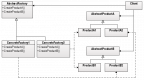
Object Oriented Design using Design Patterns Training Course
Objective:
This course is designed to assist Technical Analysts and Designers in comprehending the software implementation of requirements, thereby ensuring clear traceability between business specifications and the resulting software code.
Over the course of two days, technical analysts and designers will learn how to translate business analyst specifications into technical designs. By converting these requirements into software component representations, the system components effectively trace system requirements down to the software component structures.
Ultimately, these technical specifications are realized through software code and tested at the component level. The resulting software components exhibit a high degree of adaptability to change, enabling separate tracing of system behaviors layer by layer—from user interfaces to the business object layer, passing through application components where actor usage choices are stored.
This course is available as onsite live training in Italy or online live training.Course Outline
Introduction
- Understanding the System Analysis and Design Process
- The role of Analysis and Design activities within the Unified Process (RUP)
- An overview of UML 2 diagrams utilized in system analysis and design
- Frameworks for tracing requirements toward software implementation and testing
Transforming Requirements into Component-Based Analysis Specifications
- Establishing traceability between requirements and system analysis
- Advanced concepts for representing system structure and dynamics
- Refining requirements across both axes
- Proceeding to system design using operation contracts
- Case Study: Defining the system's analysis component model
Transforming Analysis Specifications into Design-Level Specifications
- Maintaining traceability between system analysis and design
- Applying Design Patterns to achieve loose coupling and high cohesion in components
- Defining the Design-Level Architectural Backbone of the system (components, ports, interfaces, and exchange objects)
- Utilizing design-level interaction diagrams to implement operation contracts
- Case Study: Updating the design-level component diagram with architectural decisions
Implementing Technical Specifications and Component-Based Testing
- Translating design-level specifications into an object-oriented programming language
- Deploying components onto physical nodes
- Conducting integration and acceptance tests based on prior specifications
Conclusion
- Key steps of the system analysis and design processes
- Patterns for ensuring traceability between requirements and software code
- Validating requirements against the system architecture
Note: The aforementioned training and mentoring sessions are conducted interactively using Requirement Engineering and Modeling tools to ensure a robust level of traceability between requirements and underlying solutions. Concepts are initially explained through basic examples and are subsequently followed by solution drafts addressing your specific challenges. Following this session, we can support you by reviewing and validating your solutions tailored to your needs.
Open Training Courses require 5+ participants.
Object Oriented Design using Design Patterns Training Course - Booking
Object Oriented Design using Design Patterns Training Course - Enquiry
Object Oriented Design using Design Patterns - Consultancy Enquiry
Testimonials (1)
Good exercises
Hui Yi Neo - Titansoft Pte Ltd
Course - Object Oriented Design using Design Patterns
Upcoming Courses
Related Courses
Design Patterns
14 HoursA wide array of proven and reliable patterns is readily accessible to all. Often, the process simply involves adapting nomenclature and implementing the pattern within a specific technology. This approach can save hundreds of hours that would otherwise be devoted to design and testing phases. Training Objectives This course aims to achieve two primary goals: first, enabling you to leverage well-established patterns, and second, empowering you to create and reuse patterns tailored to your organization. It assists you in estimating how patterns can reduce costs, systematize the design process, and generate a code framework based on your specific patterns. Target Audience Software designers, business analysts, project managers, programmers and developers, as well as operational managers and software division managers. Course Approach The course focuses on use cases and their relationship with specific patterns. Most examples are explained in UML and in simple Java examples (the language can change if the course is booked as a closed course). It guides you through the sources of the patterns as well as showing you how to catalogue and describe patterns which can be reused across your organization.
Insurtech: A Practical Introduction for Managers
14 HoursInsurtech (also known as Digital Insurance) signifies the intersection of insurance and emerging technologies. Within this domain, "digital insurers" leverage technological innovations to transform their business and operational models, aiming to reduce costs, enhance customer experiences, and increase operational agility.
This instructor-led training enables participants to grasp the technologies, methodologies, and mindsets required to drive digital transformation within their organizations and across the broader industry. The program is specifically designed for managers seeking a comprehensive understanding, aiming to cut through the hype and jargon to take the initial steps in formulating an Insurtech strategy.
Upon completion of this training, participants will be able to:
- Discuss Insurtech and its various components in a knowledgeable and structured manner
- Identify and clarify the role of key technologies within the Insurtech ecosystem.
- Develop a general strategy for implementing Insurtech initiatives within their organization
Target Audience
- Insurance professionals
- Technologists working within the insurance industry
- Insurance stakeholders
- Consultants and business analysts
Course Format
- A blend of lectures, discussions, exercises, and case study group activities
Design Patterns in C#
14 HoursTarget audience:
Technical Team Leaders, Software Developers
Learning objectives:
The course aims to equip participants with the skills to design advanced C# development and project architectures.
Students will explore MSDN resources and tools that support the development workflow, including Microsoft Visual Studio and ReSharper.
Design Patterns (GoF) for Java
21 HoursThis instructor-led, live training in Italy (online or onsite) is aimed at intermediate-level Java developers who wish to apply design patterns to improve software structure, maintainability, and scalability.
By the end of this training, participants will be able to:
- Understand the purpose and benefits of design patterns.
- Apply Creational, Structural, and Behavioral patterns effectively in Java.
- Improve code reusability, scalability, and maintainability.
- Refactor existing codebases using design patterns.
Design Patterns in PHP
14 HoursThis instructor-led, live training in Italy (online or onsite) is designed for intermediate-level PHP developers who wish to apply design patterns effectively in their projects.
By the end of this training, participants will be able to:
- Understand the purpose and benefits of design patterns.
- Identify and implement appropriate design patterns for common scenarios.
- Structure PHP applications using industry-recognized best practices.
- Integrate patterns into modern frameworks such as Symfony or Zend.
Fintech: A Practical Introduction for Managers
14 HoursIn this instructor-led, live training in Italy, participants will develop a comprehensive understanding of the technologies, methodologies, and mindset required to implement a successful Fintech strategy.
This course is designed for managers who need a 'big picture' grasp of the Fintech landscape, enabling them to cut through the hype and jargon while taking concrete initial steps toward adopting new technologies relevant to financial businesses and services.
By the end of this training, participants will be able to
- Present viable Fintech strategies for their organization.
- Understand and explain the role and functionality of key technologies.
- Draft an action plan for introducing new technologies in step-by-step fashion.
Insurance in the Digital Era
14 HoursInsurance in the Digital Era offers a practical overview of how digital transformation is reshaping products, operations, and customer engagement within the insurance industry.
This instructor-led live training (available online or onsite) is designed for intermediate-level insurance professionals who wish to understand and apply digital technologies, data-driven strategies, and innovation frameworks to modernize their insurance offerings and operations.
By the end of this training, participants will be able to:
- Explain the role of AI, Big Data, IoT, and automation in modern insurance workflows.
- Identify InsurTech trends and how they affect the insurance ecosystem.
- Design customer-centric strategies enabled by digital tools and data insights.
- Apply data-driven approaches to risk management and decision making.
- Develop an innovation and change management approach suitable for insurers.
- Assess real-world case studies and translate lessons into local initiatives.
Format of the Course
- Interactive lecture and discussion.
- Case study analysis and group workshops.
- Practical exercises and action planning for participants’ organizations.
Course Customization Options
- To request a customized training for this course, please contact us to arrange.
IREB CPRE – Foundation Level (Extended): Practical Requirements Engineering and Certification Preparation
14 HoursRequirements Engineering (RE) plays a pivotal role in software and systems development, centering on the identification, documentation, and management of stakeholder needs and constraints to guarantee project success.
This instructor-led live training, available online or on-site, targets intermediate-level professionals eager to deepen their grasp of practical Requirements Engineering while preparing for the IREB CPRE – Foundation Level certification exam.
After completing this training, participants will be equipped to:
- Comprehend and apply the fundamental concepts and terminology outlined in the IREB CPRE Foundation syllabus.
- Identify and elicit requirements using effective, context-suitable techniques.
- Model, document, and validate requirements for real-world projects.
- Manage requirements changes, traceability, and prioritization throughout the project lifecycle.
- Leverage Requirements Engineering tools and best practices to improve communication and project outcomes.
- Feel fully prepared to take and pass the IREB CPRE – Foundation Level certification exam.
Course Format
- Interactive lectures and discussions.
- Case-based exercises and collaborative workshops.
- Exam preparation sessions and practice questions.
Course Customization Options
- Additional modules or industry-specific case studies can be added upon request.
JavaScript - Advanced Programming
14 HoursThis training is tailored for JavaScript developers who aim to design and implement advanced Internet applications. The course focuses on establishing best practices in JavaScript programming and identifying common pitfalls. A key objective is to explore object-oriented programming concepts using JavaScript syntax.
Kubernetes Design Patterns
21 HoursThe rapid advancement of microservices and container technologies in recent years has fundamentally transformed how we design, develop, deploy, and operate software. Today's applications need to be optimized for scalability, elasticity, resilience against failures, and adaptability to change. To meet these modern demands, architecture requires a distinct set of patterns and practices. In this training, we explore strategies to identify, comprehend, and adapt to these evolving requirements.
Target Audience
This course is designed for individuals who have a foundational understanding of container technology and Kubernetes concepts but may lack practical, real-world experience. The content is grounded in use cases and lessons learned from actual projects, aiming to inspire participants to build and manage even more effective cloud-native applications.
- Developers
- Operations staff
- DevOps professionals
- QA Engineers
- IT Project Managers
Course Format
- Interactive lectures and discussions
- Extensive exercises and practical sessions
- Hands-on implementation within a live laboratory environment
Course Customization Options
- To arrange a customized training session for this course, please contact us to discuss your specific needs.
Kubernetes Design Patterns and Extensions
14 HoursKubernetes serves as an open-source platform designed to automate every phase of the development lifecycle for containerized applications. Design patterns provide repeatable solutions to common challenges in software architecture, while Kubernetes extensions allow for the configuration and support of Kubernetes clusters. By leveraging these design patterns and extensions, platform users can implement CI/CD strategies while preserving the scalability and flexibility of their software applications.
This instructor-led live training, available either online or onsite, targets developers and DevOps engineers aiming to utilize Kubernetes design patterns and extensions to build enterprise-grade applications on Kubernetes clusters.
Upon completing this training, participants will be able to:
- Configure a Kubernetes cluster and set up essential DevOps tools.
- Grasp the core principles of software design patterns and Kubernetes extensions.
- Apply Kubernetes extensions and design patterns when working with the Kubernetes API.
- Build custom Kubernetes resources and deploy dynamic controllers within a cluster.
- Manage and secure Kubernetes environments using various plugins.
- Incorporate DevOps networking models into current and future Kubernetes initiatives.
Course Format
- Interactive lectures and group discussions.
- Extensive practical exercises and hands-on practice.
- Live-lab implementation exercises.
Customization Options
- To arrange a tailored version of this course, please contact us for scheduling.
Model Based Development for Embedded Systems
21 HoursModel-Based Development (MBD) is a software development methodology that enables faster, more cost-effective development of dynamic systems such as control systems, signal processing and communication systems. It relies on graphic modeling rather than the traditional text based programming.
In this instructor-led, live training participants will learn how to apply MBD methodologies to reduce development costs and accelerate the time to market of their embedded software products.
By the end of this training, participants will be able to
- Select and utilize the right tools for implementing MBD.
- Use MBD to carry out rapid development in the early stages of their embedded software project.
- Shorten the release of their embedded software into the market.
Format of the course
- Part lecture, part discussion, exercises and heavy hands-on practice
Microservice Patterns: Migrating from a Monolithic to a Microservice Architecture with .Net
14 HoursMicroservice architecture is a software development approach where an application is built as a collection of small, independent services. Each service operates in its own process and communicates via lightweight mechanisms, such as HTTP resource APIs. These services can be deployed efficiently using continuous automation tools, reducing the reliance on centralized management. Additionally, microservices can be developed in various programming languages and integrated with diverse data storage systems.
This instructor-led live training is designed for enterprise developers and architects. It introduces microservice architecture from a .NET perspective, outlines migration strategies from monolithic systems, and guides participants through the creation and deployment of a sample microservice-based application.
Upon completing this training, participants will be able to:
- Evaluate when to adopt or avoid microservice architecture
- Develop and implement a testing strategy for microservices
- Deploy a sample microservice-based application into a production environment
- Refactor a monolithic application into independent services
Audience
- Developers
- Architects
Format of the course
- A mix of lectures, discussions, exercises, and extensive hands-on practice
Requirements Analysis
21 HoursThis instructor-led, live training in Italy (online or onsite) is designed for individuals who wish to understand requirements analysis and execute it efficiently and accurately using analysis techniques for their projects.
Upon completing this training, participants will be capable of:
- identifying various types of requirements.
- understanding the core concepts and activities associated with requirements analysis.
- familiarizing themselves with the requirements analysis methodology.
- effectively utilizing diverse requirements analysis techniques to their benefit.
- structuring requirements to facilitate efficient communication with architects and developers through an iterative requirement gathering process.
Software Engineering, Requirements Engineering and Testing
63 HoursThis course illustrates the core principles and practical applications of software engineering, requirements engineering, and testing through hands-on exercises.